The Furniture Never Stays On The Floor
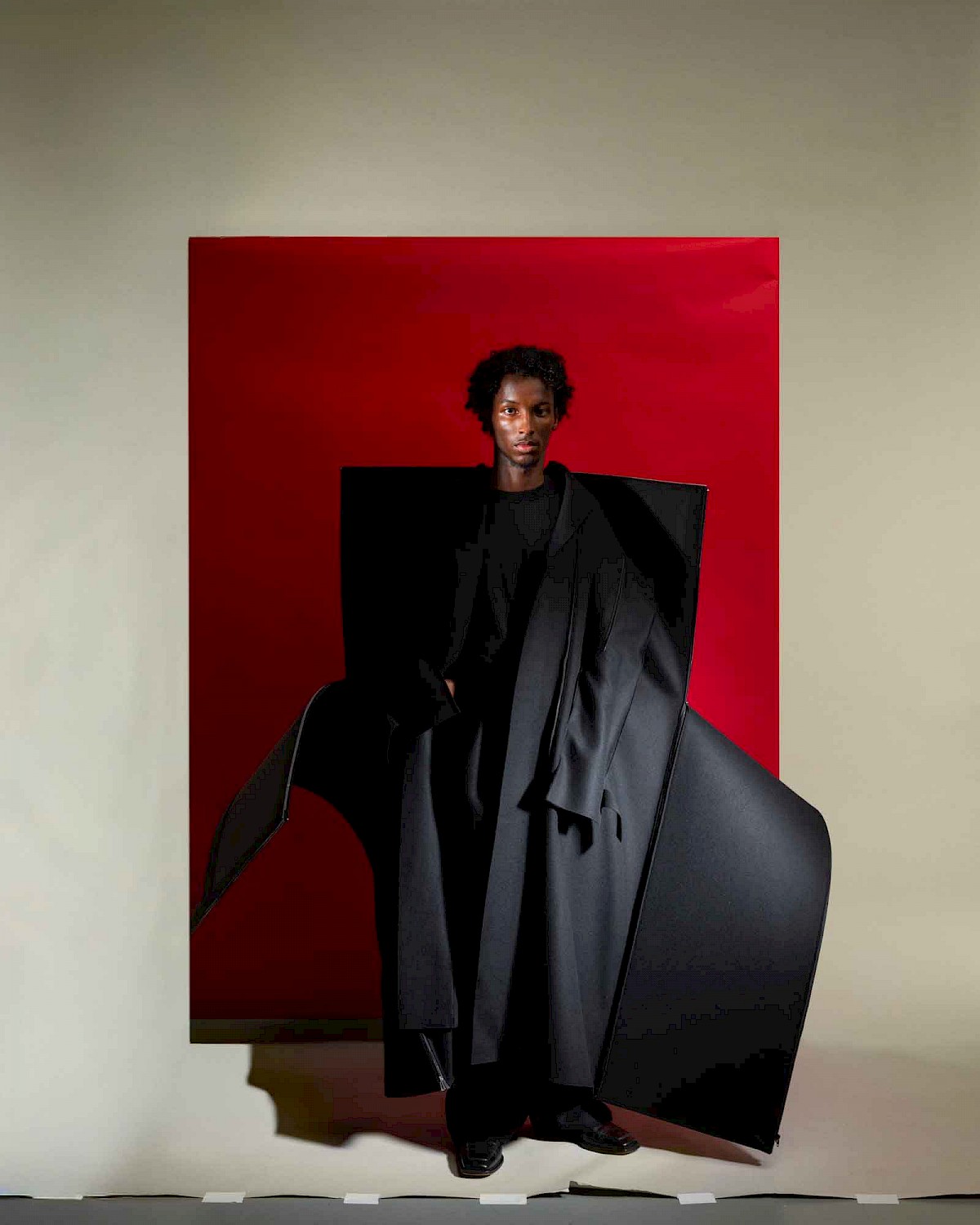
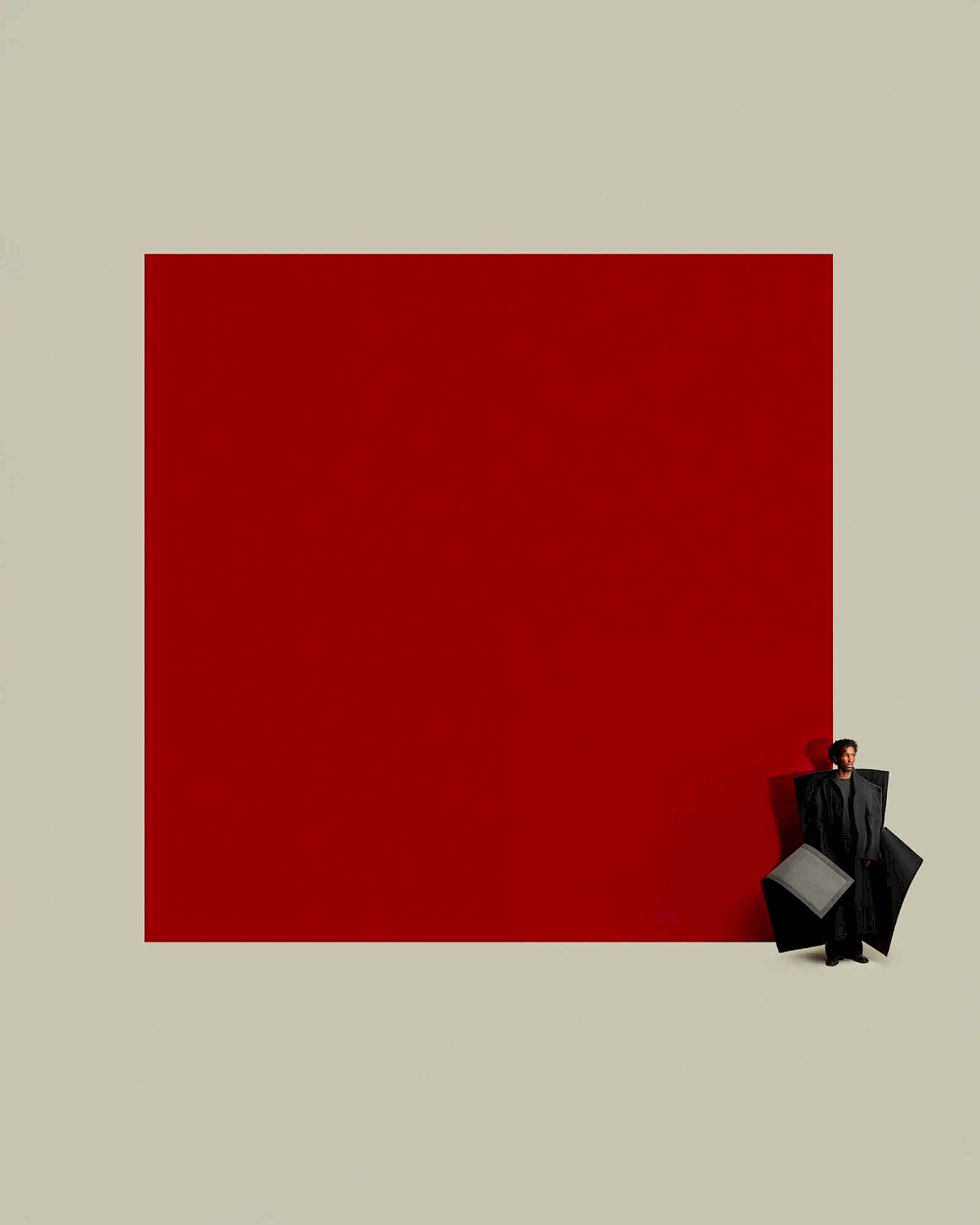
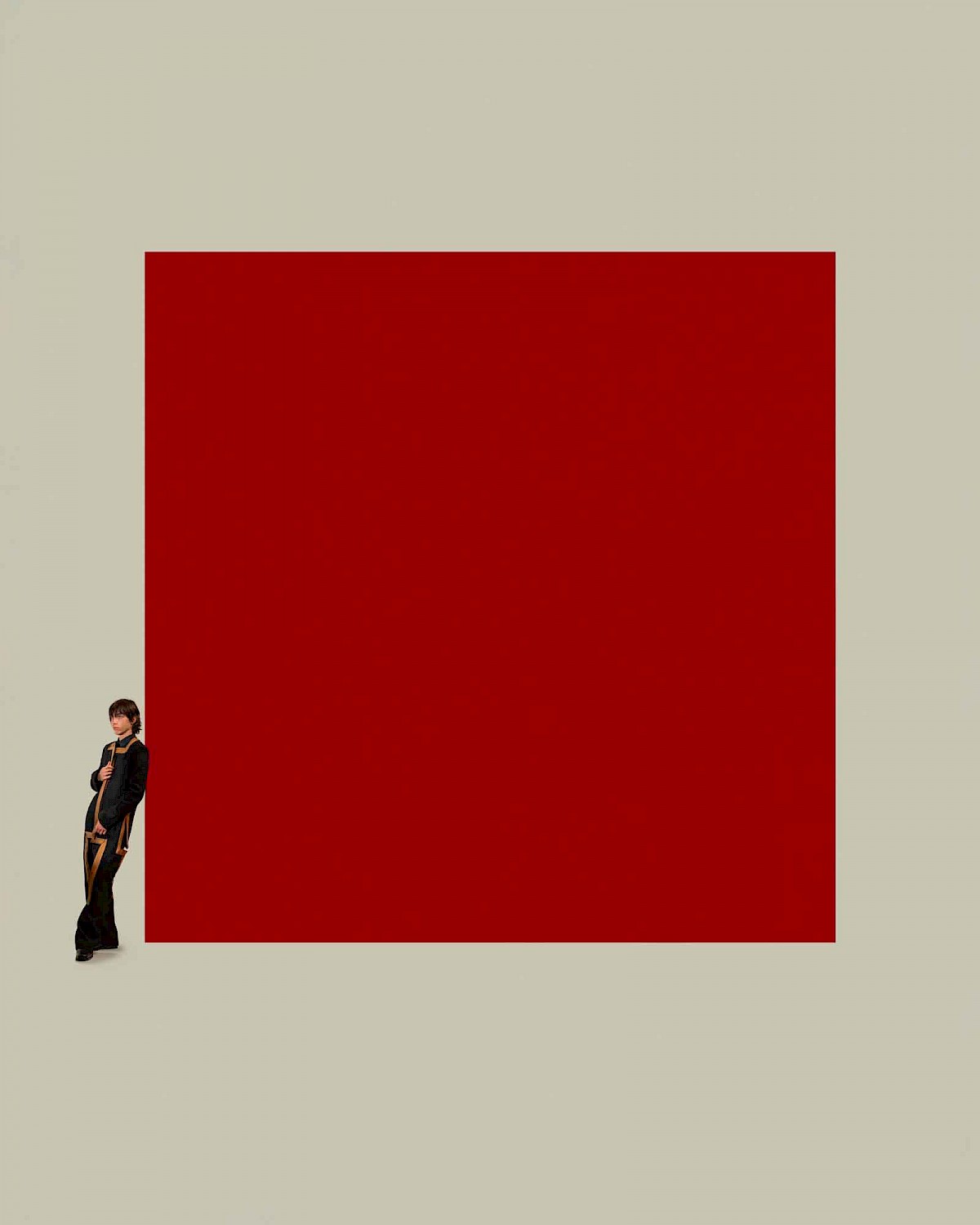
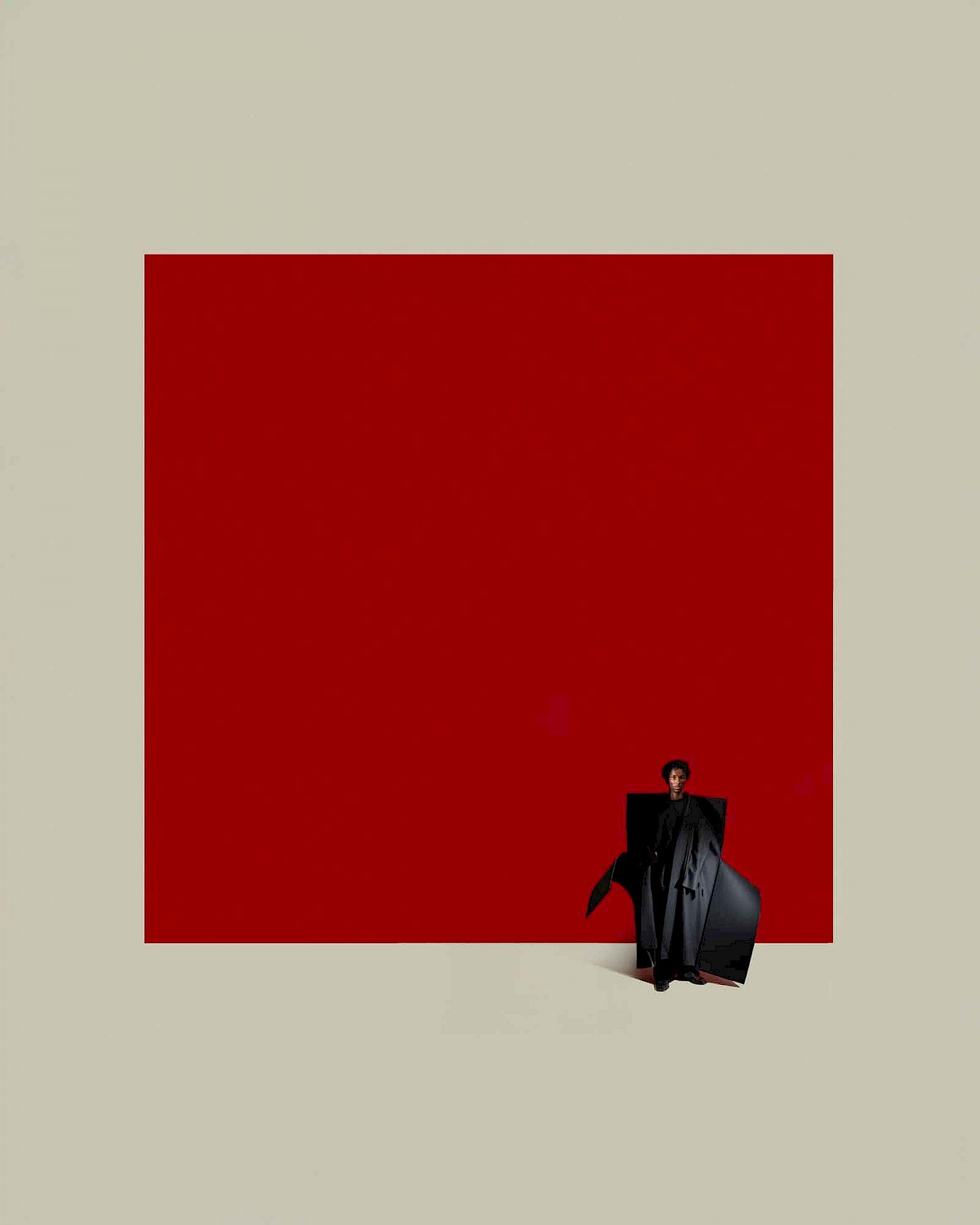
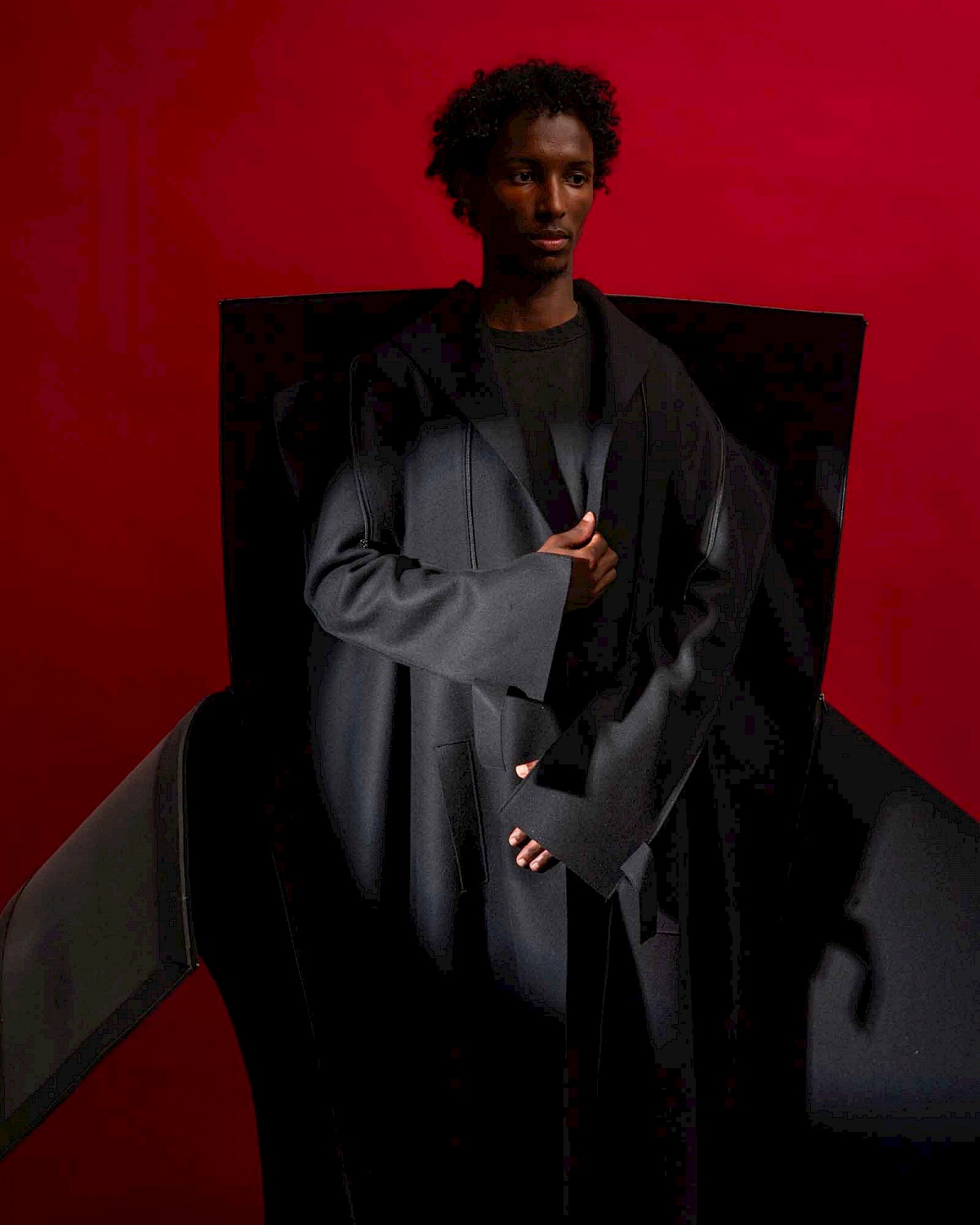
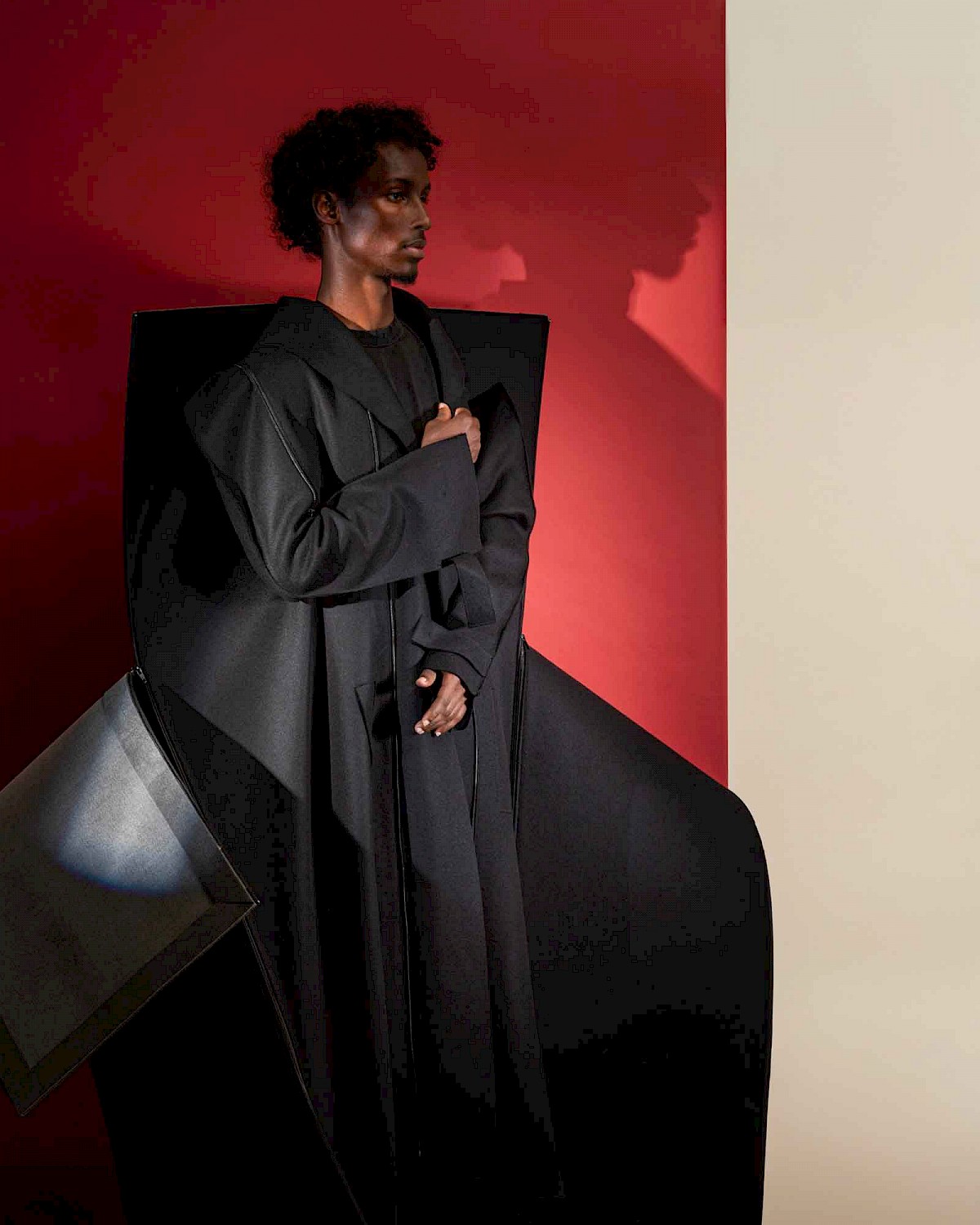
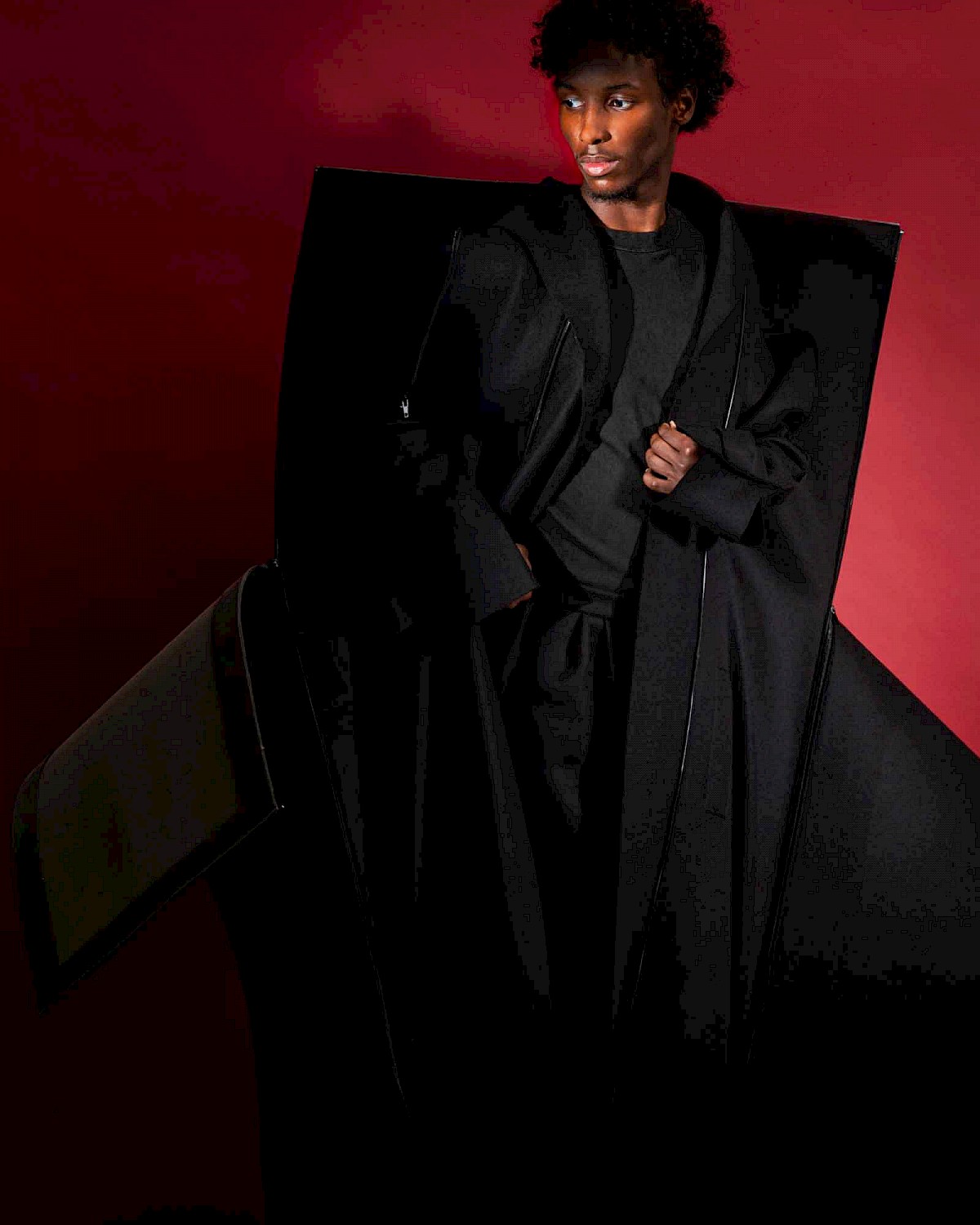
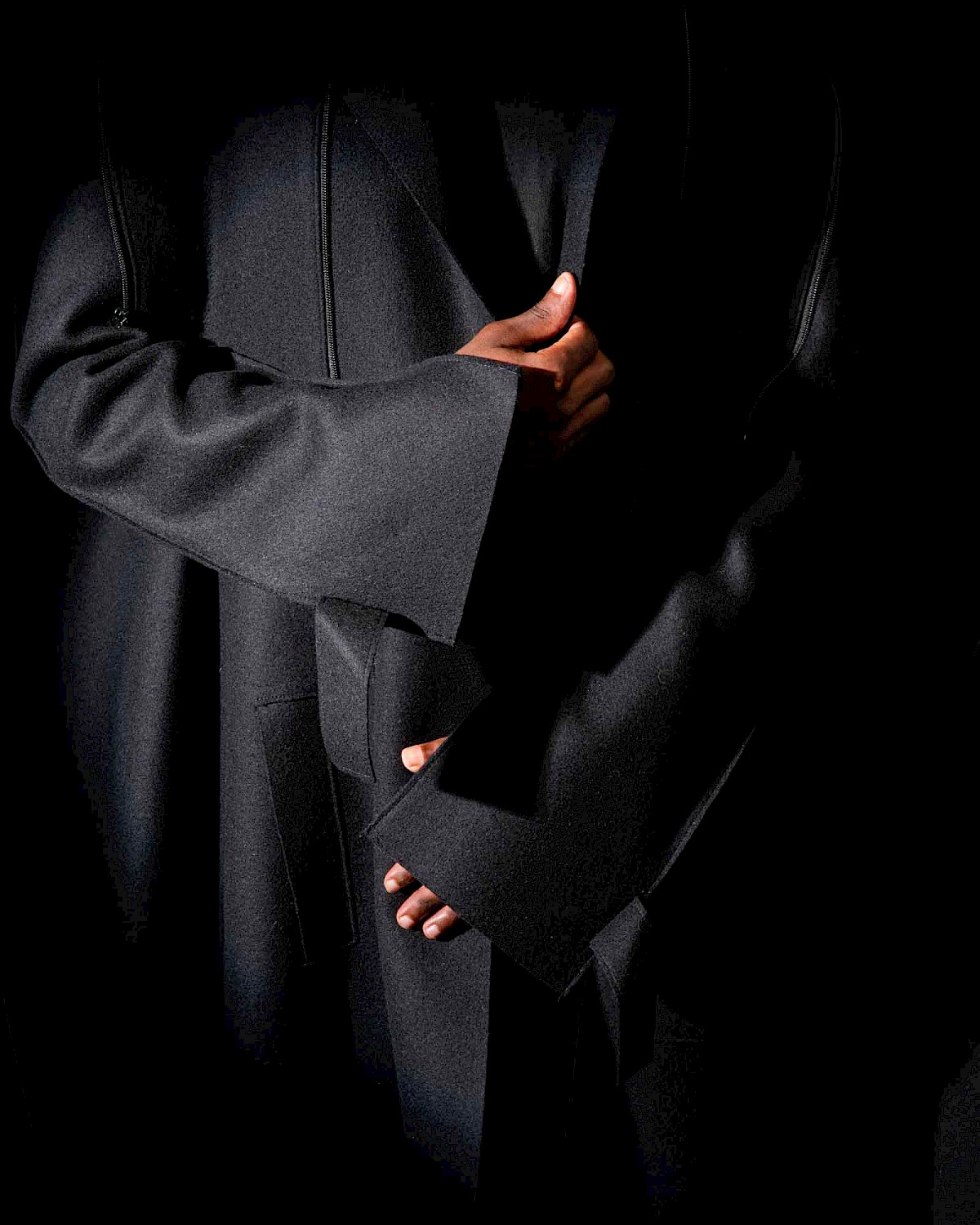
Prenant comme point de départ le mobilier du salon-séjour de mes parents à Metz, The Furniture Never Stays on the Floor se présente comme une dissection des surfaces et une analyse des volumes occupant l’espace domestique. L’étude des « specific objects » géométriques de Donald Judd m’a amené à questionner cet environnement et la manière dont il pourrait être retranscrit par des gestes de coupe. Stimulé par cette rigidité et ayant grandi dans cette ville au climat rigoureux et aux influences germaniques, mon attention s’est naturellement portée sur le tailoring masculin observé dans les rues messines des années 60.
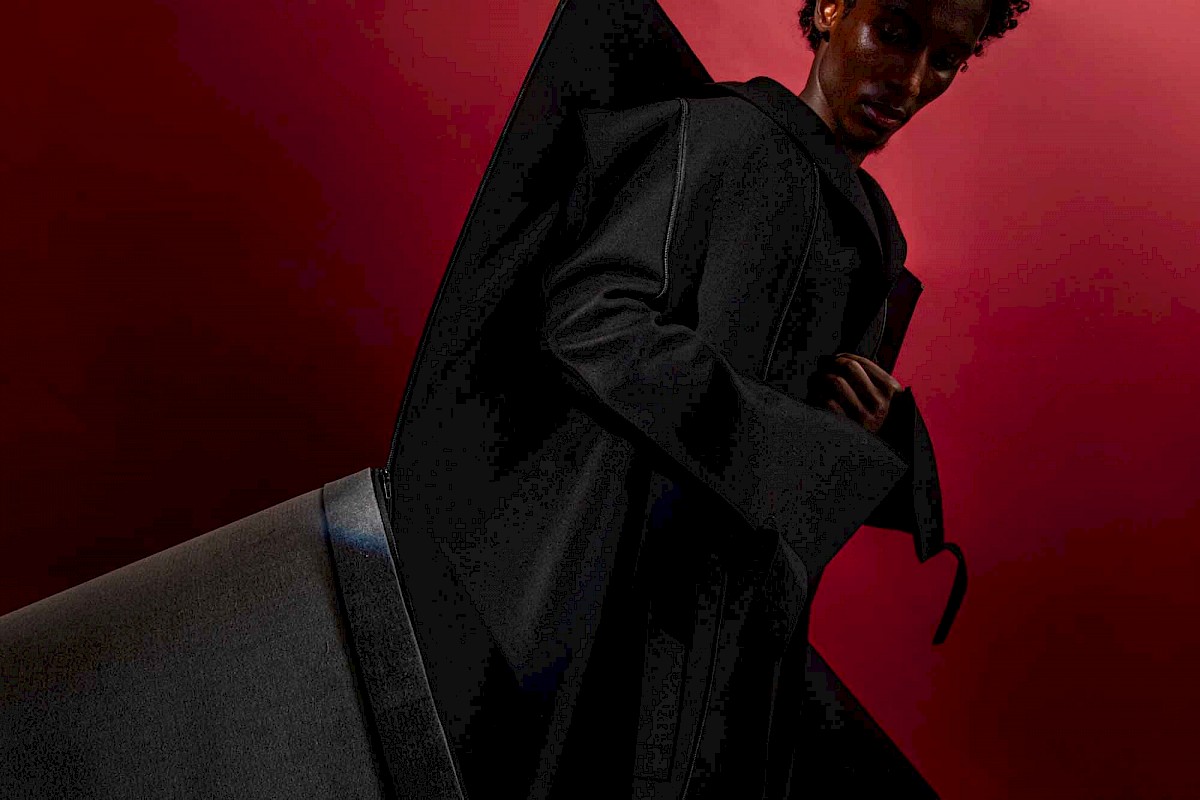
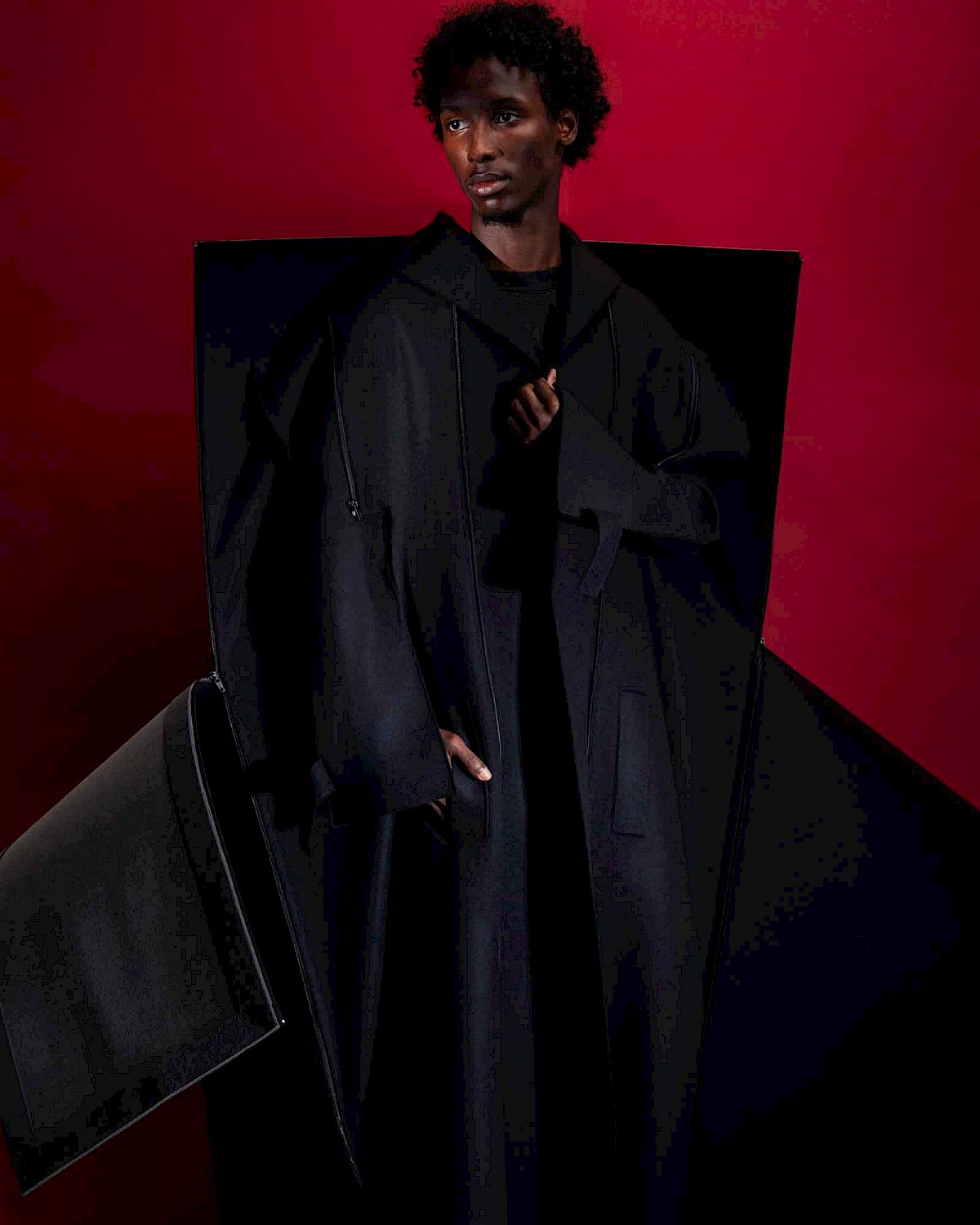
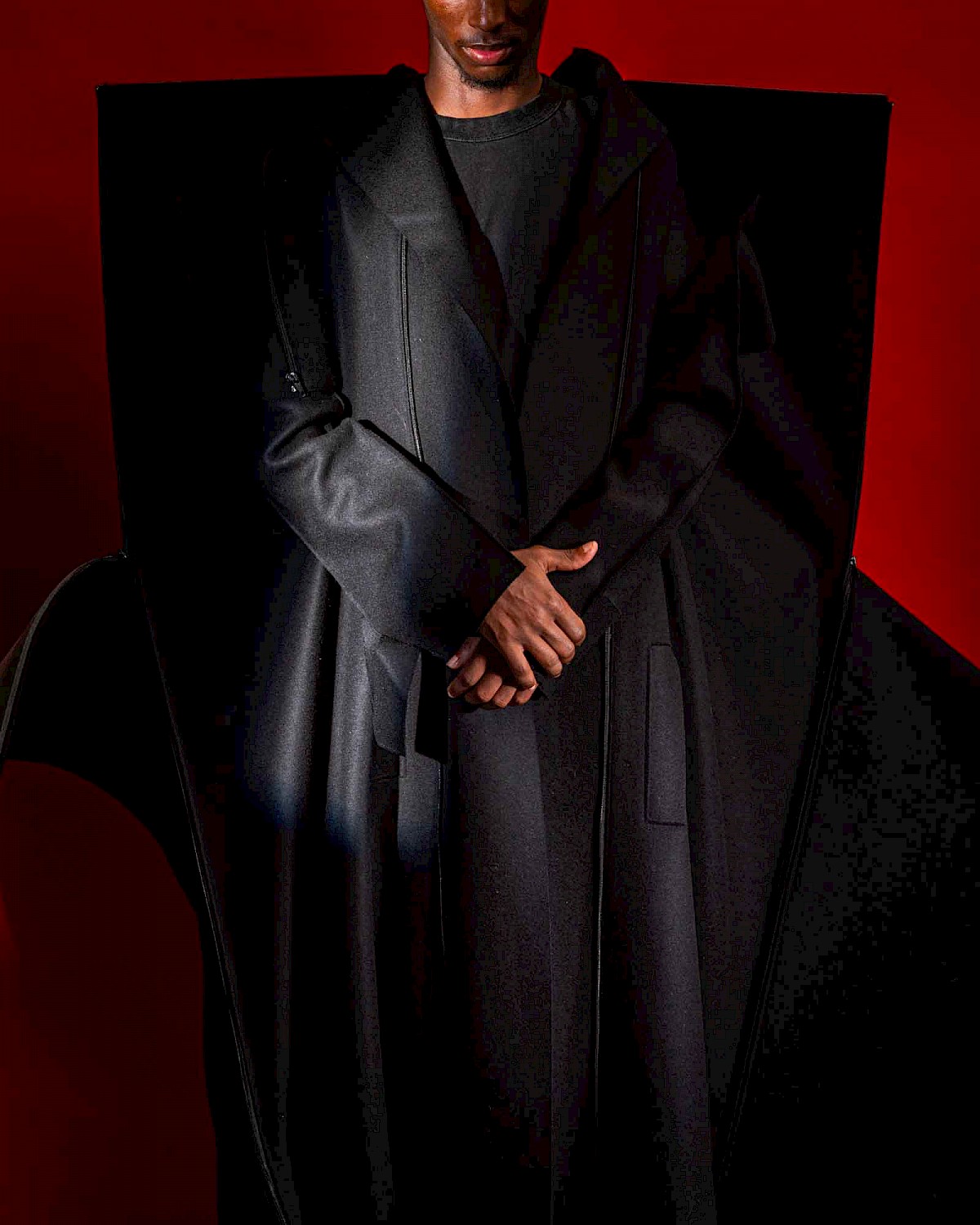
La collection conjugue ces deux regards, partageant une même logique de construction, pour aboutir à une garde-robe masculine outwear enveloppante et structurante. Les silhouettes se détachent de l’objet figé ; en résulte un vestiaire où le classique se veut habitable et le meuble, la matrice d’habillage.
Taking the furniture in my parents’ living room in Metz as its starting point, The Furniture Never Stays on the Floor presents itself as a dissection of surfaces and an analysis of the volumes that occupy domestic space. Studying Donald Judd’s geometric “specific objects” led me to question this environment and how it could be translated through the gestures of pattern cutting. Drawn to this rigidity, and having grown up in a city shaped by a harsh climate and Germanic influences, my attention naturally turned to the menswear tailoring seen on the streets of Metz in the 1960s.
The collection brings these two perspectives together through a shared logic of construction, resulting in an enveloping and structuring men’s outerwear wardrobe. The silhouettes break away from the static object, giving rise to a wardrobe in which classic garments become inhabitable forms and furniture becomes a framework for dressing.
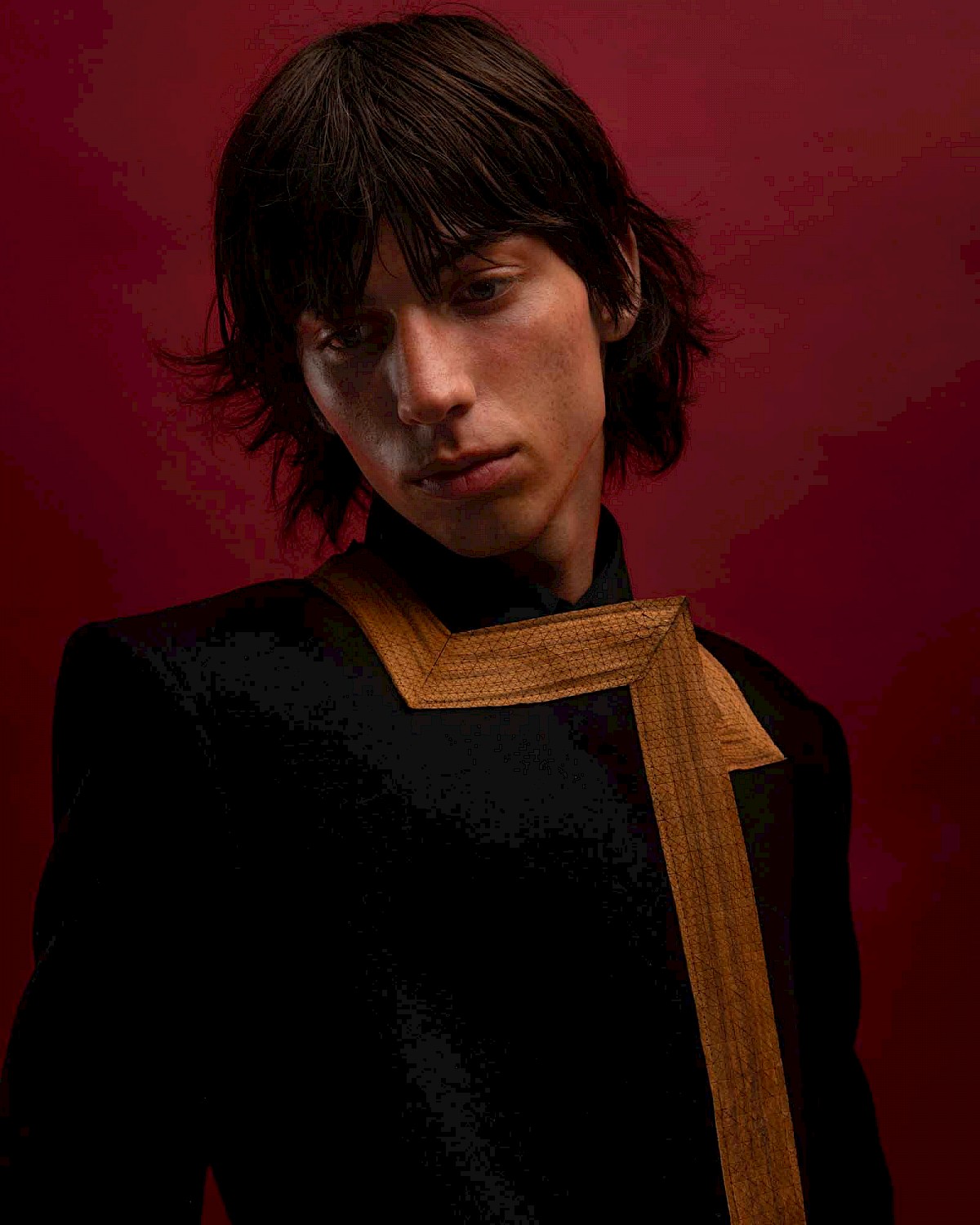
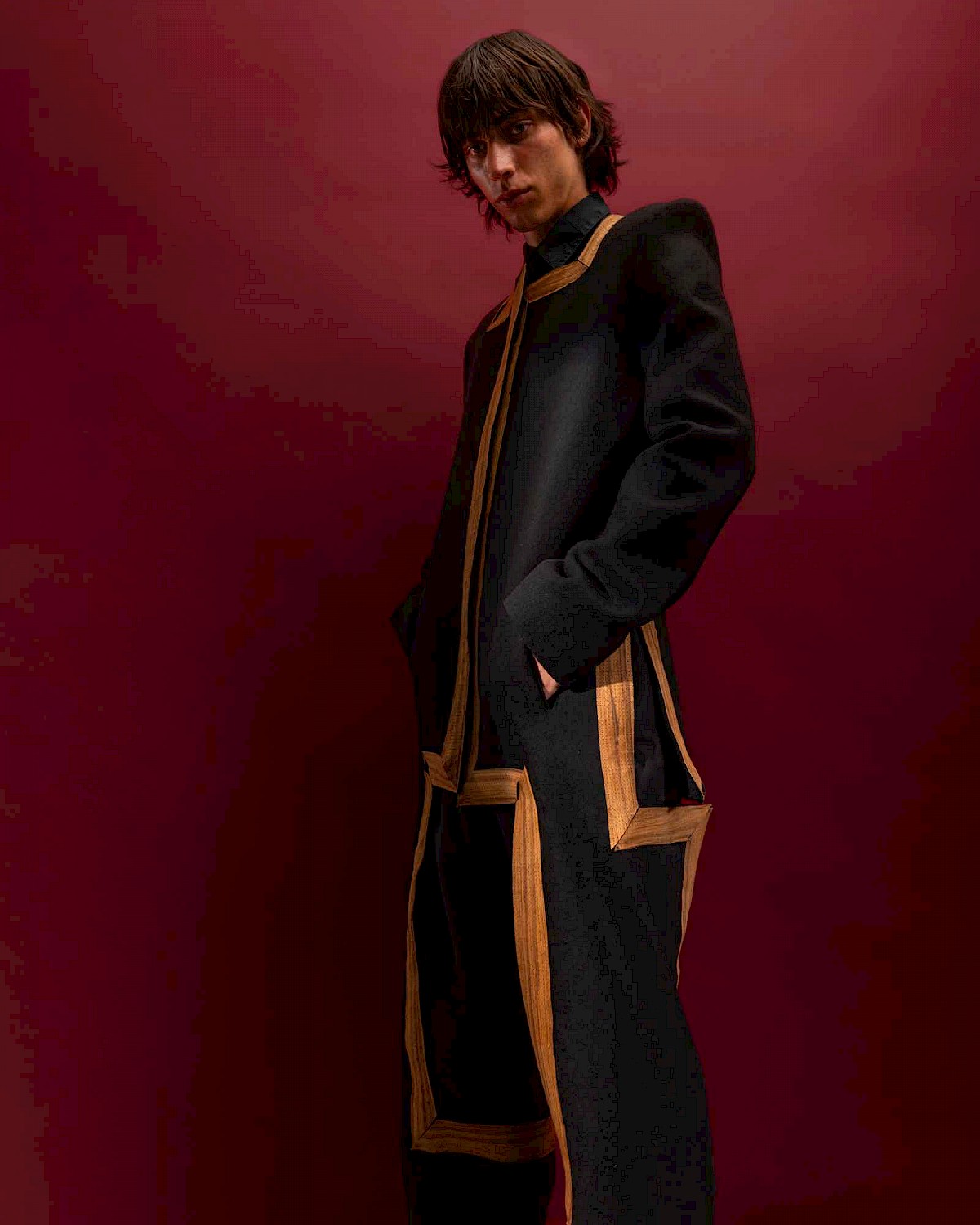
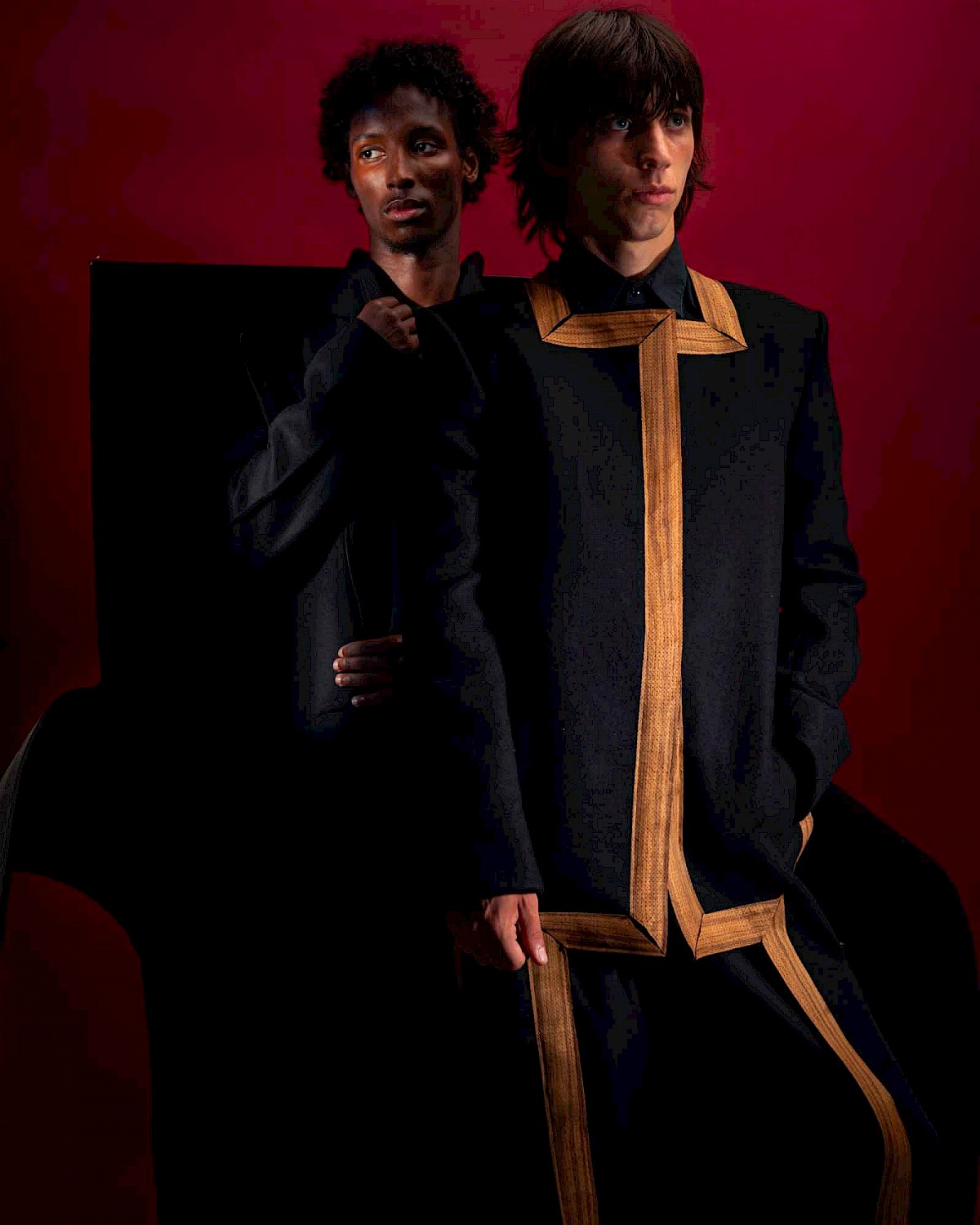
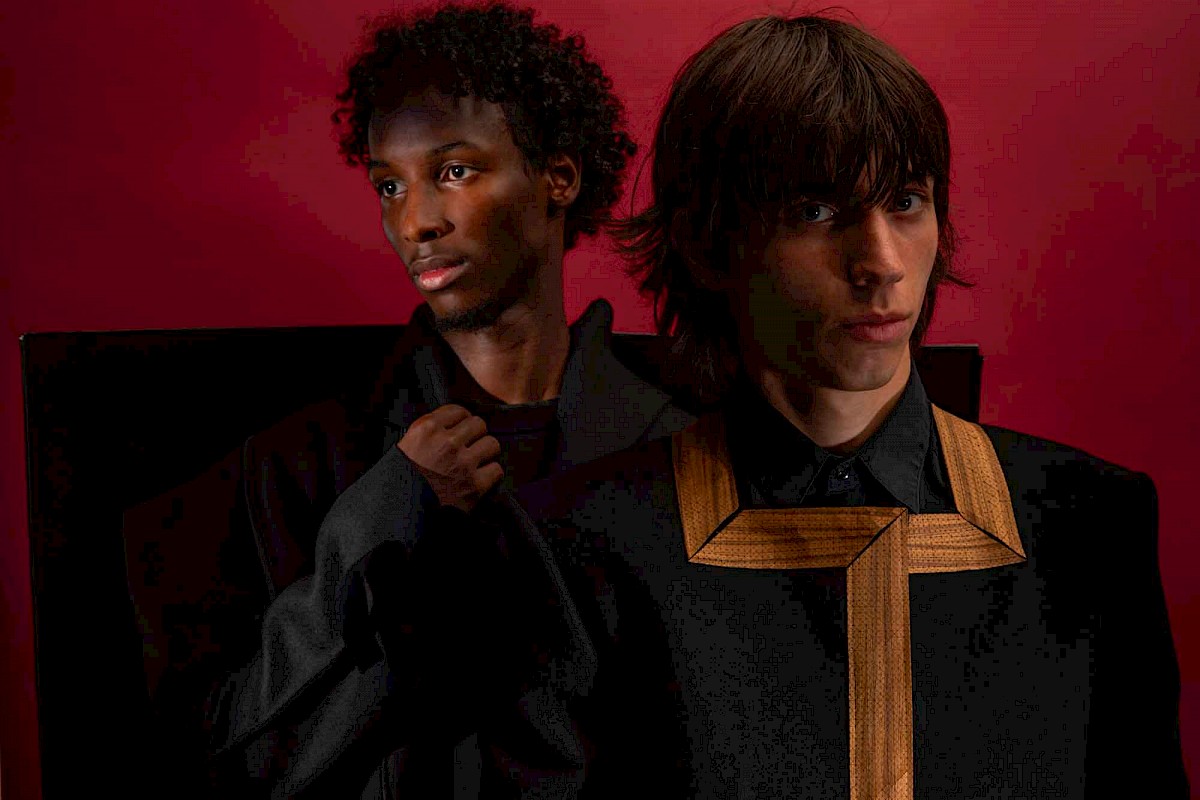
© HEAD — Genève, Sylvain Leurent
© HEAD — Genève, Sylvain Leurent